
#26 Elvis Presley: Blue Hawaii
Updated: Feb 15, 2025
The King of Rock n Roll…now with added ukulele!
(RCA)
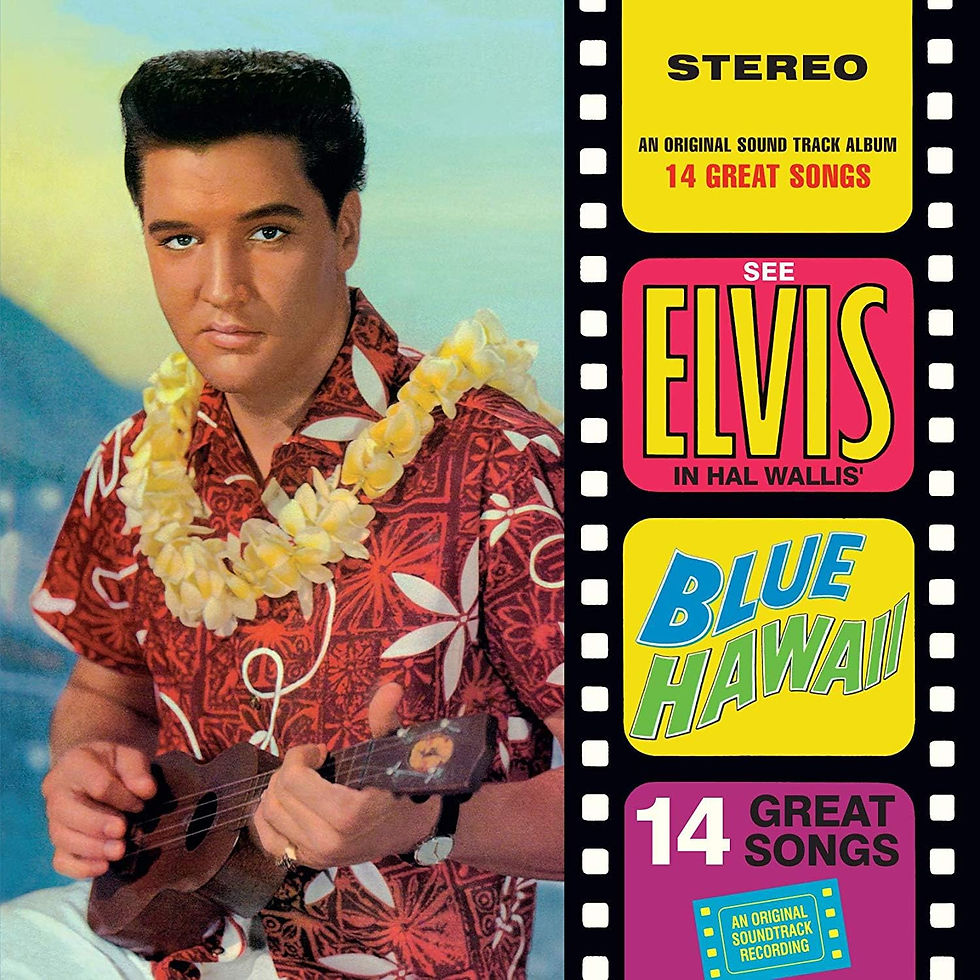
Released: 20th October 1961
Topped the Chart:
31st December 1961 (for 1 week)
18th February 1962 (for 17 weeks)
18 weeks total
Blue Hawaii makes a turning point for Elvis Presley, both musically and creatively. An enormous seller, it was the second most successful soundtrack album of the 1960s and as a result left him stymied as an artist. Where previously, manager Colonel Tom Parker allowed for one studio album between soundtracks which is where Elvis could grow as an artist. Now, it was full steam ahead into films, at least two a year between 1962 and 1968, each release growing increasingly stale.
But while Blue Hawaii is the cliff-edge, it remains the most satisfying LP release of Presley’s movie era. It may be insubstantial and packed with fluff in places, but the laid back Hawaiian air that flows through the grooves means it holds together well. The soft, more casual style suits Elvis, a change from the more operatic style of It’s Now or Never (with the exception of No More, itself, like the aforementioned, translating a traditional European love song in barrel-chested style).
As young people might say, it’s definitely a vibe.
The first half’s more blissed-out feel is particularly strong, with both the title track (originated by Bing Crosby in the film Waikiki Wedding) and Moonlight Swim being so laid back they might as well be the surfboards on the beach. Both are representative of the albums’ feel: packed with ukulele, celeste and soothing backing vocals. More traditional sounds can be found on Aloha Oe, this version arranged by Elvis himself, packed with yearning pedal steel before swelling with full-bodied Hollywood backing vocals.
Of course, Blue Hawaii’s real classic is Can’t Help Falling in Love, one of Presley’s finest songs that stands as a precursor to the more epic ballads featuring in his 70s discography. Here though, the tone is more hushed and devotional, drawing on the work from his derided 1960 gospel album His Hand in Mine. The vocal swells and tenderness make it feel genuinely romantic, while the occasional pedal steel peals keep it thematically relevant without getting in the way of the emotion.
The album’s other big hit, Rock-A-Hula Baby, is less successful. Here the Hawaiian textures tip into full-on tourism parody, with Presley knocking out every one of his stereotypical vocal tics with lyrics referring to grass skirts and the “Hula-lu from Honolu.” It would be like including a song called Greek Waiters Smashing Plates.
Ku-U-I-Po kicks off side two and is the last really great song on the record (for those lovelorn backing vocals, if nothing else) before it slowly runs out of steam. Hawaiian Sunset and Island of Love are fine but recycle ideas from the first half, while Slicin’ Sand is a chugging Chuck Berry rocker so in love with the shoreline that even the Beach Boys might think it’s a touch over-egged.
There’s no doubt that the LP hangs together well in its feel, and it’s hard to be mad at an LP this relaxed and fun. Plus, Presley was still giving his all in his performances, which wouldn’t be the case with these throwaway soundtracks much longer.
Score: 7/10
Tracklisting:
SIDE A
1. Blue Hawaii
2. Almost Always True
3. Aloha ‘Oe
4. No More
5. Can’t Help Falling In Love
6. Rock-A-Hula Baby
7. Moonlight Swim
SIDE B
8. Ku-U-I-Po
9. Ito Eats
10. Slicin’ Sands
11. Hawaiian Sunset
12. Beach Boys Blues
13. Island of Love
14. Hawaiian Wedding Song


Comments